Source Dried Garlic Granules for Seasoning, Soup, and Snack
Find 28 listings for Dried Garlic Granules from Shandong Province suppliers. Buyers can compare specifications like mesh size, moisture content, and packaging options to select the right product for seasoning, soup, and snack applications.
Key considerations
Products List


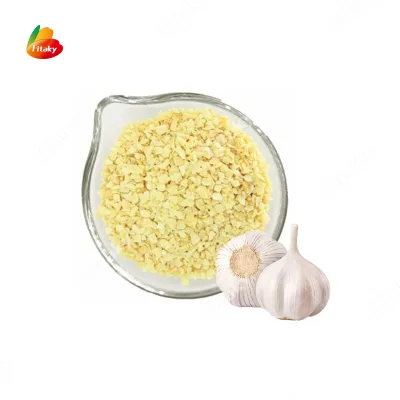
Garlic Supplier Exporter Garlic Granules Dehydrated Dried Garlic Minced in Bulk
$0.70 - $2.50
MOQ: 1000 Minimum


Comprehensive Sourcing Guide
Strategic Sourcing Guide for Dried Garlic Granules
Understanding Product Variants and Technical Specifications
The procurement of Dried Garlic Granules requires a precise understanding of the specific technical attributes that define the product category. In the current market, "Dried Garlic Granules" are often categorized alongside related forms such as dehydrated garlic, dry garlic, and garlic flakes, though the granule form is distinct in its particle size and intended application. Buyers must distinguish between products labeled as "Garlic Granules," "Dehydrated Garlic Granules," and "Dry Garlic Granules," as these terms may refer to the same physical product or distinct processing stages depending on the supplier's nomenclature.
The physical characteristics of the granules are critical for formulation consistency. The observed market data indicates that the standard style for these products is "Granule," which differentiates them from whole bulbs or sliced flakes. The color profile is another primary specification; suppliers typically offer "White Skin Garlic" and "Purple Skin Garlic" variants. The type of garlic used further refines the product, with options ranging from "Normal White" to "Pure White" and "Peeled" varieties. The moisture content is a defining factor, with the market offering both "Dried Garlic" and "Fresh Garlic" options, though the core keyword specifically targets the dried variant.
Particle size and mesh specifications are perhaps the most vital technical parameters for food manufacturers. The supply chain supports a wide range of mesh sizes, including 8-16 mesh, 16-26 mesh, 26-40 mesh, and 20-40 mesh. Some listings also reference a specific "40" mesh standard. These variations allow buyers to match the granule size to their specific processing equipment and final product texture requirements. Additionally, the specification "Mixed-Level" suggests that some batches may contain a non-uniform distribution of particle sizes, which requires careful verification if strict uniformity is a production requirement.
| Attribute Category | Observed Market Options | Procurement Consideration |
|---|---|---|
| Style | Granule, Whole, Flake | Verify particle size distribution for application fit. |
| Color | White Skin, Purple Skin | Ensure color matches brand or recipe standards. |
| Type | Normal White, Pure White, Peeled | Confirm if peeling is required or if skin inclusion is acceptable. |
| Mesh Size | 8-16, 16-26, 26-40, 20-40, 40 | Select based on dissolution rate and texture needs. |
| Moisture | Dried, Fresh | Ensure the product is fully dehydrated for shelf stability. |
Compliance, Certification, and Quality Standards
When sourcing Dried Garlic Granules, verifying compliance with international food safety standards is non-negotiable. The supply chain demonstrates a range of certification levels, from general quality grades to specific international food safety protocols. Buyers should expect to encounter products that adhere to "grade 1" or "export 1st grade" standards, which indicate a baseline of quality control regarding appearance and purity.
Beyond general grading, specific certifications are available to validate the safety and ethical standards of the production process. The market data confirms the availability of HACCP (Hazard Analysis and Critical Control Points) certification, which is essential for managing food safety risks. Furthermore, suppliers may offer religious dietary certifications, including Halal and Kosher, which are critical for markets with specific dietary restrictions. The presence of "100% Natural" claims is observed, but buyers must treat such marketing terms as observations rather than guaranteed attributes without third-party verification.
It is important to note that not every listed product will satisfy every certification or standard. A single supplier may offer HACCP-certified granules while another offers only export-grade products. Buyers must explicitly request proof of certification for the specific batch or production line they intend to purchase. The origin of the product also plays a role in compliance; the primary production hubs are located in Shandong Province, China, with specific mentions of Jinxiang, a region known for garlic cultivation. This geographic concentration suggests a mature supply chain, but it also necessitates rigorous due diligence regarding local agricultural practices and export regulations.
Cost Drivers and Pricing Dynamics
The pricing of Dried Garlic Granules is influenced by a complex interplay of factors, including raw material quality, processing complexity, and packaging requirements. The observed price range in the market is exceptionally broad, spanning from $0.70 to $3,000 USD. This wide variance does not necessarily reflect a linear scale of quality but rather indicates differences in order volume, packaging customization, and specific product attributes.
One of the primary cost drivers is the Minimum Order Quantity (MOQ). The market exhibits an MOQ range from 1 unit up to 1,000 units, with specific bulk requirements such as 10 tons or 1x container loads. Purchasing at the lower end of the MOQ spectrum often results in a higher unit cost due to the fixed costs of processing and logistics. Conversely, larger orders, such as full container loads, typically benefit from economies of scale, though the total capital outlay is significantly higher.
Packaging specifications also impact the final cost. Standard options include "25kg/CTN" (carton), "Mesh Bag and Carton," or "Caton" (likely a variation of carton). However, the market also supports "as Required" or "According to Your Requirement" packaging, which implies a premium for custom labeling, specialized barrier materials, or unique pallet configurations. The choice between standard and custom packaging can significantly alter the per-unit price. Additionally, the crop year, such as the "2026" crop mentioned in some listings, may influence pricing based on harvest yields and seasonal availability. Buyers should anticipate that fresh garlic varieties or those requiring specific peeling processes may carry a premium over standard dried granules.
Typical Applications and Usage Scenarios
Dried Garlic Granules serve as a versatile ingredient across various food and beverage sectors, primarily valued for their convenience and consistent flavor profile. The primary use case identified in the market is "for Seasoning," indicating their role in dry rubs, spice blends, and seasoning mixes. The granular form allows for even distribution in dry applications where liquid garlic or fresh cloves would be impractical.
The specific mesh size of the granules dictates their application. Finer meshes, such as 26-40 mesh or 40 mesh, are ideal for applications requiring rapid dissolution or a smooth texture, such as soups, sauces, and marinades. Coarser granules, like 8-16 mesh, are better suited for dry seasoning blends, snack coatings, or as a textural component in baked goods. The "Fried Garlic" variant, listed as "Fried Garlic Granules," offers a distinct flavor profile for applications requiring a savory, toasted note, such as pizza toppings, pasta sauces, or savory snacks.
The "Peeled" and "Pure White" varieties are particularly valuable for products where visual aesthetics are paramount, such as in white sauces or light-colored dressings where dark specks from garlic skins would be undesirable. The "Purple Skin Garlic" variant may be preferred for its distinct flavor intensity or specific color properties in certain ethnic cuisines. The storage temperature of "-3 Degree" suggests that some products may require frozen or cold chain logistics to maintain freshness, although dried granules are generally shelf-stable. Buyers must align the product specification with their end-use to ensure the granules perform correctly in their specific formulation.
Supplier Evaluation and Operational Logistics
Evaluating suppliers for Dried Garlic Granules requires a focus on their operational capabilities, specifically regarding customization, origin, and logistics. The "Customization: Available" attribute is a significant advantage, allowing buyers to tailor the product to their specific needs regarding mesh size, packaging, and labeling. This flexibility is crucial for private label operations or unique product development.
The geographic origin is a key factor in supplier evaluation. The majority of the supply originates from Shandong Province, with specific hubs in Jinxiang. This concentration suggests a robust local infrastructure for garlic processing and export. However, buyers should verify the specific production facility's capacity and history. The "Supplying Period: All Season" indicates that suppliers claim year-round availability, which is beneficial for maintaining consistent production schedules.
Logistics and lead times are critical components of the procurement process. The observed "Shipment Day: 21days" provides a benchmark for delivery timelines, though this can vary based on the shipping method. The primary transport mode is "by Sea," which is cost-effective for bulk orders but requires careful planning for inventory management. Buyers should confirm the exact lead time from order confirmation to shipment, as this can impact production planning. Additionally, the "MOQ: 10tons" or "1xcontainer" requirements for bulk buyers mean that smaller orders may face longer lead times or higher unit costs.
Quality Control and Long-Term Procurement Strategy
Implementing a robust quality control (QC) strategy is essential for mitigating risks associated with Dried Garlic Granules. Given the variability in moisture content and mesh size, buyers should establish clear acceptance criteria before placing orders. Regular testing for moisture content is vital to prevent microbial growth and ensure shelf stability. The distinction between "Dried Garlic" and "Fresh Garlic" must be rigorously verified, as the latter requires different storage conditions and has a significantly shorter shelf life.
For long-term procurement, building a relationship with suppliers who offer "export 1st grade" or certified products is advisable. Buyers should prioritize suppliers who provide transparent documentation regarding their certifications, such as HACCP, Halal, and Kosher. The ability to customize packaging and specifications is a strong indicator of a supplier's commitment to partnership.
Long-term success also depends on understanding the market dynamics of the garlic crop. The "2026" crop reference highlights the importance of planning around harvest cycles. Buyers should consider diversifying their supplier base to mitigate risks associated with crop failures or regional disruptions. Establishing clear communication channels regarding quality issues, such as color inconsistencies or moisture deviations, will help maintain product integrity over time. Finally, buyers should remain vigilant regarding the "Mixed-Level" specification, ensuring that any non-uniformity in particle size aligns with their production capabilities. By focusing on these technical and operational details, buyers can secure a reliable supply of high-quality Dried Garlic Granules that meet their specific business needs.
FAQs
What mesh sizes are available for Dried Garlic Granules?
Available mesh sizes include 8-16, 16-26, 26-40, and 20-40 mesh options. Some listings also specify a 40 mesh standard or mixed-level distributions. Buyers must verify the exact particle size to match their processing equipment requirements.
Which certifications are available for Dried Garlic Granules?
Products can be certified with HACCP, Halal, and Kosher standards. Some suppliers also offer export 1st grade or grade 1 quality certifications. Buyers should request proof of certification for the specific batch they intend to purchase.
Can suppliers customize packaging for Dried Garlic Granules?
Yes, customization is available for packaging requirements. Options include standard 25kg cartons, mesh bags, or custom specifications according to buyer needs. This flexibility supports private label operations and unique product development strategies.
What is the typical lead time for shipping Dried Garlic Granules?
The observed shipment day is typically 21 days. Transport is primarily conducted by sea, which is cost-effective for bulk orders. Buyers should confirm exact lead times as they may vary based on order volume and logistics planning.
Where are Dried Garlic Granules typically sourced from?
Products are primarily sourced from Shandong Province, China, with specific hubs in Jinxiang. This region is known for garlic cultivation and processing. Buyers should verify the specific production facility's capacity and export history.
What is the minimum order quantity for Dried Garlic Granules?
Minimum order quantities range from 1 unit up to 1000 units. Specific bulk requirements may include 10 tons or a full container load. Purchasing at lower MOQs often results in higher unit costs due to fixed processing expenses.